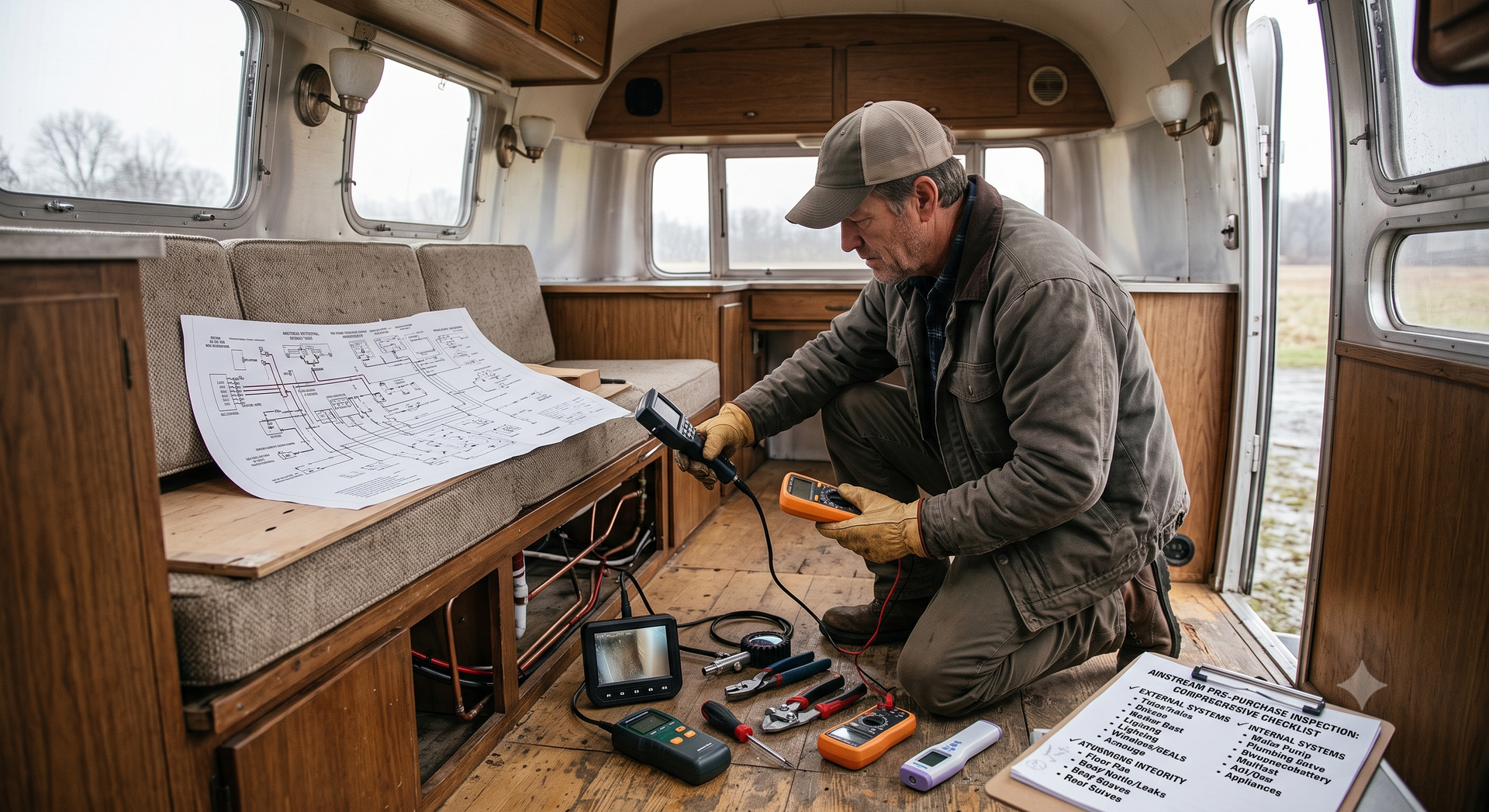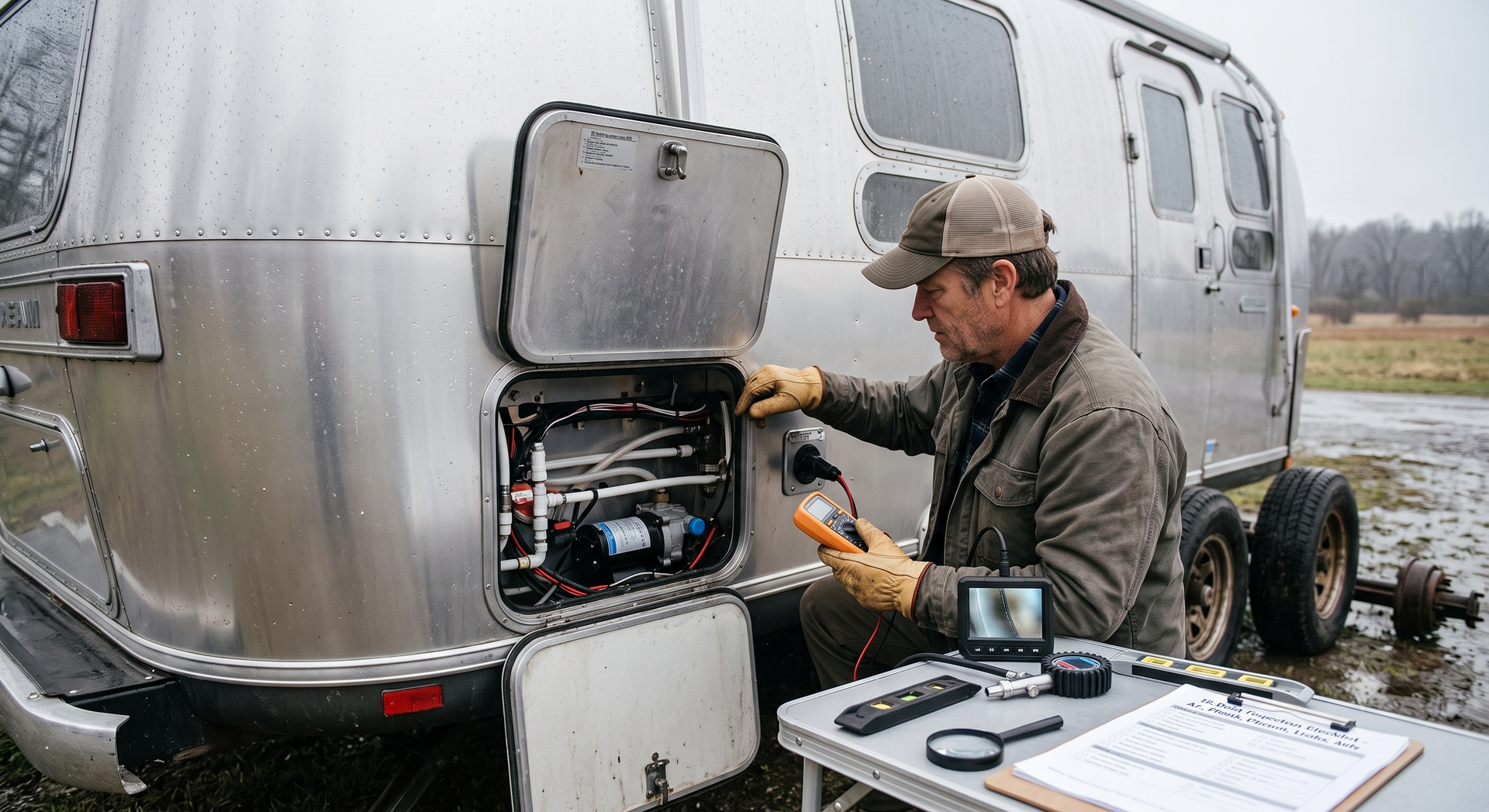

Top 7 RV Electrical Problems and How to Fix Them
Reliable electrical power defines the modern RV experience. From air conditioning and refrigeration to lighting and device charging, every essential system depends on stable voltage and properly functioning components. When electrical issues arise, they disrupt comfort, damage appliances, and create safety risks. We address the seven most common RV electrical problems, their precise symptoms, and the most effective repair solutions to restore dependable performance.
1. Dead RV Battery or Rapid Battery Drain
Symptoms of a Failing RV Battery
- Interior lights dim or flicker
- Slides move slowly
- Furnace or water pump struggles
- Battery drains overnight
- Voltage reads below 12.0V
Primary Causes
- Aging lead-acid batteries
- Parasitic loads
- Corroded terminals
- Improper charging
- Faulty converter
How We Fix It
- Test battery voltage with a multimeter:
- 12.6V = fully charged
- 12.2V = 50% charge
- Below 12.0V = depleted
- Clean battery terminals using a baking soda solution and wire brush.
- Load test the battery to confirm capacity.
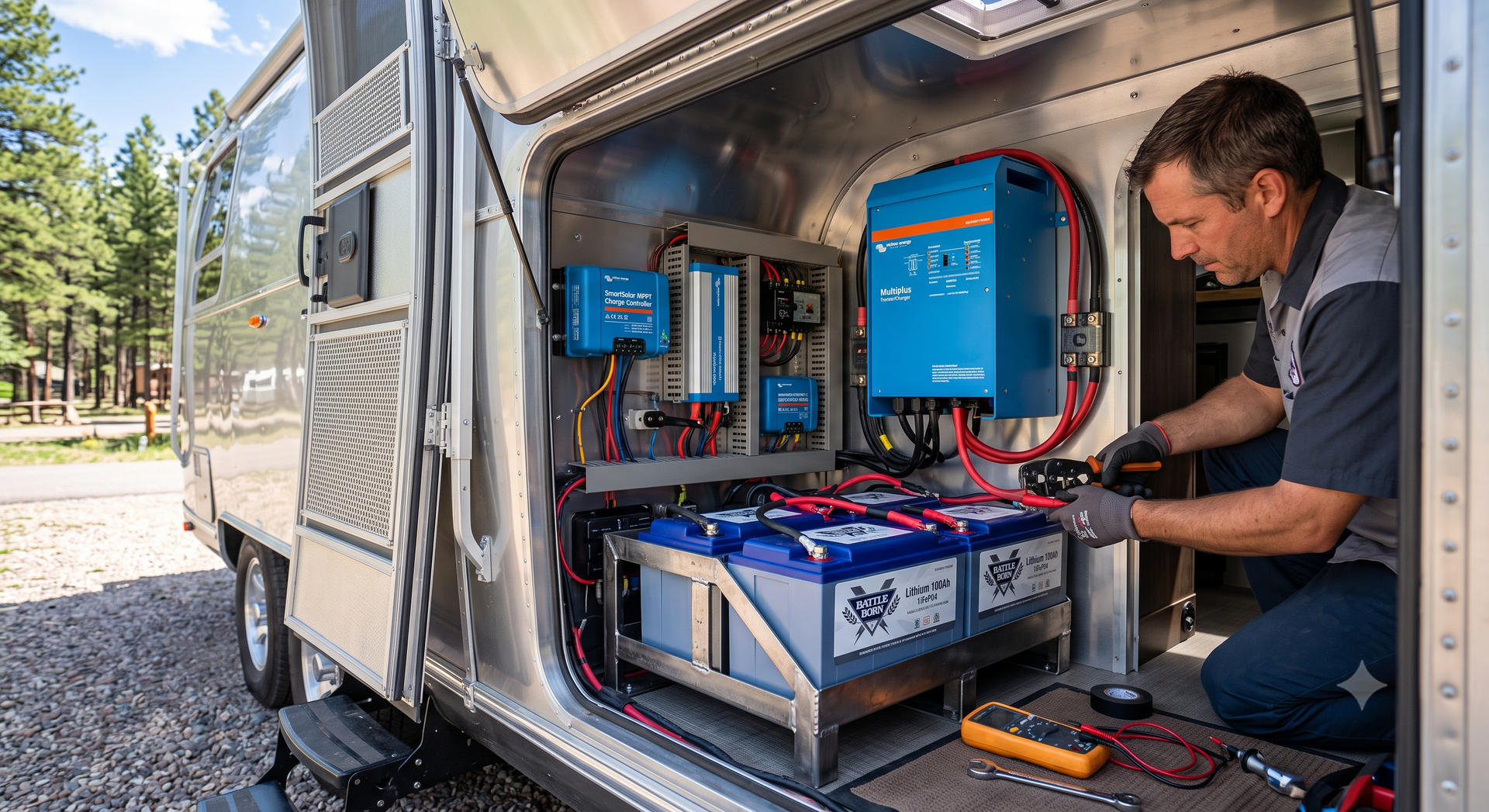
- Replace batteries older than 3–5 years (lead-acid) or upgrade to LiFePO4 lithium batteries for extended lifespan and faster charging.
- Inspect the converter output (should read 13.6V–14.4V when charging).
Routine battery inspection prevents unexpected power loss during travel.
2. RV Converter Not Charging Batteries
The converter transforms 120V AC shore power into 12V DC to power lights and recharge batteries.
Symptoms of Converter Failure
- Batteries do not charge when plugged in
- Interior 12V systems fail despite shore power connection
- Burning smell near power panel
- Blown fuses repeatedly
Repair Procedure
- Confirm shore power supply with a voltage tester.
- Inspect the main breaker panel.
- Check DC output using a multimeter.
- Replace blown reverse polarity fuses.
- If output is inconsistent, replace the converter unit.
Modern multi-stage smart converters improve charging efficiency and prevent battery overcharging.
3. Tripping Circuit Breakers or Blown Fuses
Frequent breaker trips indicate overload or short circuits.
Symptoms
- AC shuts off unexpectedly
- Microwave or outlets stop working
- Breaker trips when multiple appliances run
Common Causes
- Running high-wattage appliances simultaneously
- Short circuits in wiring
- Loose connections
- Faulty breaker
Corrective Action
- Identify the overloaded circuit.
- Disconnect high-draw appliances (air conditioner, space heater, microwave).
- Inspect outlets for burn marks.
- Tighten loose wiring inside the breaker panel.
- Replace worn or weak breakers.
We ensure each circuit remains within its rated amperage—typically 30A or 50A depending on RV configuration.
4. Shore Power Connection Issues
Improper shore power can damage electrical systems quickly.
Symptoms
- Power cuts in and out
- Electrical surges
- Appliances malfunction
- Burning smell from power cord
Solutions
- Inspect power cord for heat damage.
- Test campground pedestal voltage (should be 110–120V).
- Use a surge protector with voltage monitoring.
- Replace damaged power cord ends immediately.
Low voltage (below 105V) can permanently damage compressors and converters. Voltage monitoring is essential in older campgrounds.
5. Faulty GFCI Outlets
Ground Fault Circuit Interrupter (GFCI) outlets protect wet areas like kitchens and bathrooms.
Symptoms
- Multiple outlets stop working simultaneously
- Reset button will not stay engaged
- No visible breaker trip
Fixing GFCI Problems
- Locate the primary GFCI outlet (often near sink or bathroom).
- Press the reset button firmly.
- If it will not reset, disconnect appliances from the circuit.
- Replace the GFCI outlet if internal failure is confirmed.
A single tripped GFCI can disable all downstream outlets.
6. Inverter Malfunction
An inverter converts 12V DC battery power into 120V AC for appliances when not connected to shore power.
Symptoms
- No AC power while boondocking
- Inverter alarm beeping
- Overload or low battery warnings
Common Causes
- Low battery voltage
- Overloaded inverter capacity
- Overheating due to poor ventilation
- Internal component failure
Resolution Steps
- Verify battery voltage above 12.2V.
- Reduce load to stay within inverter wattage rating.
- Ensure inverter ventilation is unobstructed.
- Reset inverter according to manufacturer instructions.
- Replace damaged inverter if internal failure occurs.
Correct inverter sizing prevents overload shutdown.
7. RV Wiring Problems and Loose Connections
Road vibration gradually loosens wiring connections.
Warning Signs
- Intermittent power loss
- Flickering lights
- Burning odor near panel
- Melted wire insulation
Repair Process
- Disconnect all power sources.
- Inspect distribution panel for loose terminals.
- Tighten screw connections securely.
- Replace damaged wiring with marine-grade copper wire.
- Use heat-shrink connectors for durable splicing.
We prioritize secure grounding connections to eliminate voltage fluctuations.
Advanced RV Electrical Troubleshooting Checklist
We follow a structured approach:
- Confirm shore power supply.
- Test battery voltage.
- Inspect converter output.
- Check breakers and fuses.
- Reset GFCI outlets.
- Verify inverter status.
- Inspect wiring connections.
This systematic method isolates problems quickly and prevents unnecessary component replacement.
Understanding 30 Amp vs 50 Amp RV Electrical Systems
Electrical capacity directly impacts appliance operation.
30 Amp Service
- Single 120V leg
- Maximum 3,600 watts
- Limited simultaneous appliance use
50 Amp Service
- Dual 120V legs
- Up to 12,000 watts
- Supports multiple AC units
Operating within system limits prevents breaker trips and overheating.
Preventive Electrical Maintenance Practices
We maintain reliable RV electrical systems through:
- Monthly battery voltage checks
- Annual breaker panel inspection
- Cleaning shore power plug blades
- Tightening terminal connections
- Testing GFCI outlets quarterly
- Inspecting wiring after long trips
Preventive inspection reduces emergency repairs significantly.
Common Electrical Upgrade Options
Upgrades enhance reliability and efficiency.
Lithium Battery Conversion
- Faster charging
- Longer lifespan
- Deeper discharge capability
Smart Battery Monitor Installation
- Real-time voltage tracking
- Accurate state-of-charge readings
Automatic Transfer Switch Replacement
- Seamless transition between generator and shore power
Solar Panel Integration
- Off-grid charging capability
- Reduced generator dependence
Strategic upgrades modernize aging RV electrical systems.
Electrical Safety Best Practices
We implement strict safety standards:
- Disconnect all power before repairs
- Wear insulated gloves
- Use properly rated multimeters
- Avoid mixing aluminum and copper wiring
- Never bypass breakers
Electrical safety prevents fire hazards and costly damage.
Estimated Cost of RV Electrical Repairs
Repair costs vary depending on component failure:
- Battery replacement: $100–$1,200
- Converter replacement: $200–$800
- Inverter replacement: $500–$2,000
- GFCI replacement: $50–$150
- Breaker replacement: $20–$200
- Professional electrical diagnostics: $100–$250 per hour
Timely maintenance reduces high-cost repairs.
When to Seek Professional RV Electrical Service
Professional service is necessary when:
- Persistent breaker trips occur
- Burnt wiring is visible
- Converter fails repeatedly
- Inverter emits burning smell
- Power panel shows heat damage
Certified RV technicians ensure compliance with electrical safety standards.
Final Thoughts on RV Electrical Reliability
RV electrical systems combine AC and DC power in a compact mobile environment. Small issues escalate quickly if left unresolved. By diagnosing battery health, maintaining converters, monitoring shore power, and securing wiring connections, we ensure uninterrupted performance across every trip.
Consistent inspection, correct load management, and timely component replacement maintain system integrity. A properly functioning RV electrical system delivers stability, safety, and comfort allowing uninterrupted travel without unexpected power failures.