
Signs Your RV Air Conditioner Needs Repair Before Texas Summer Hits
If you've ever been parked at a Texas campground in July with a struggling RV air conditioner, you already know it's not just uncomfortable it can turn a relaxing trip into a miserable one fast. Dallas-Fort Worth summers push RV air conditioning systems to their limit, and small issues that go unnoticed in spring can turn into full breakdowns right when you need cool air the most.
At Cross Country RV Solutions, RV air conditioner repair is one of the most common calls we get once temperatures climb. Here's how to spot trouble early, and what you can do about it before your next trip.
Why RV Air Conditioners Struggle in DFW Heat
RV air conditioners are built differently than home units. They're compact, mounted on the roof, and designed to cool a much smaller space — but they're also exposed to direct sun, road vibration, and temperature swings that home units never face. In North Texas, where summer temperatures regularly climb into the high 90s and beyond, an RV AC unit that's even slightly undersized, low on refrigerant, or clogged can fall far behind on cooling.
Add in the fact that many RVs sit unused for weeks or months at a time, and it's easy for small maintenance issues to turn into bigger problems by the time you're ready to hit the road.
Common Signs Your RV AC Needs Attention
1. Weak or Warm Airflow If air is blowing but it's not cold, or barely reaching the vents, this often points to a refrigerant issue, a failing compressor, or a blocked evaporator coil.
2. Ice Buildup on the Unit Ice forming on the coils or inside the unit usually means airflow is restricted, often from a dirty filter or low refrigerant. Running the unit while iced over can cause further damage.
3. Unusual Noises Grinding, rattling, or loud humming beyond normal operation can indicate a failing fan motor, loose components, or a compressor on its way out.
4. AC Runs Constantly Without Cooling the Space If your unit runs nonstop but the interior temperature barely drops, it may be struggling with a refrigerant leak, an undersized unit for the space, or electrical issues limiting performance.
5. Water Leaking Inside the RV Condensation is normal, but water dripping from the ceiling or pooling near the AC housing usually points to a drainage issue or a failing gasket/seal around the unit.
6. Frequent Tripped Breakers RV air conditioners draw a lot of power. If your AC is tripping breakers or your generator struggles to keep it running, it could be an electrical problem rather than the AC unit itself.
7. Musty or Odd Smells When AC Runs This is often a sign of mold or mildew buildup inside the unit, which affects both air quality and cooling performance.
Should You Repair or Replace?
Not every AC issue means you need a brand-new unit. Many problems — clogged filters, refrigerant leaks, failing capacitors, or electrical faults — can be repaired without replacing the entire system. A trained technician can diagnose whether your unit needs a simple fix or a full replacement, saving you money in the long run.
Why Choose Airstream RV AC Repair in Dallas-Fort Worth
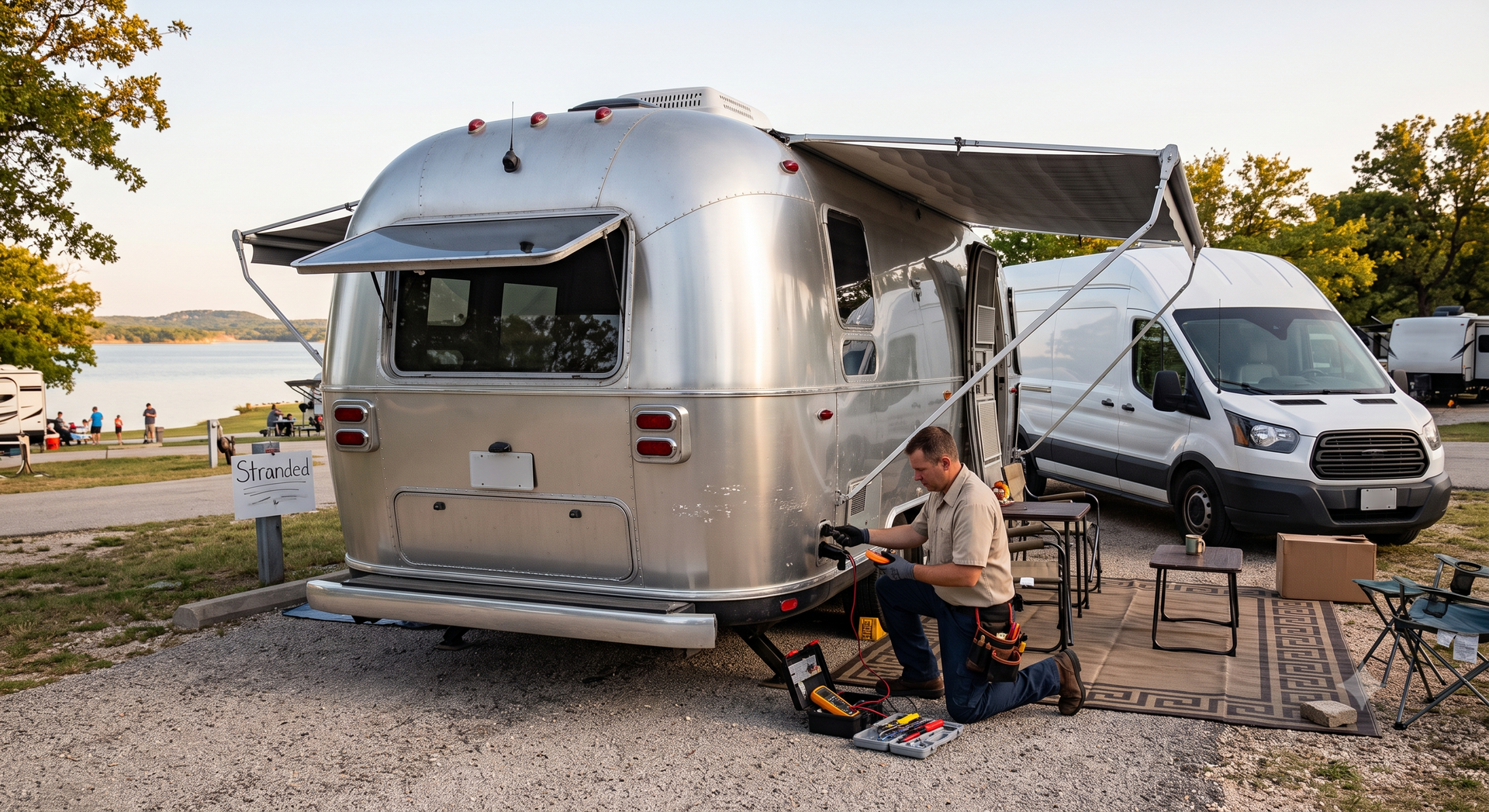
Dealership service centers in the DFW area are often booked out for weeks, especially heading into summer. Cross Country RV Solutions comes to you — whether you're at home, a storage facility, or a campground anywhere in the Dallas-Fort Worth Metroplex — so you're not stuck waiting on a dealership appointment while your AC sits broken.
We repair, maintain, and install all types of RV air conditioners, and as certified Airstream specialists, we're especially experienced working with Airstream-specific systems and layouts.
Don't Wait Until You're Stuck in the Heat
RV air conditioner problems rarely fix themselves, and Texas summers don't leave much room for error. If you're noticing any of the signs above, it's worth getting your system checked before your next trip rather than after you're already sweating it out on the road.
Ready to get your RV AC back to full strength?
Call Cross Country RV Solutions today to schedule your Airstream RV air conditioner repair in the Dallas-Fort Worth area.