
Airstream Water Damage: 9 Warning Signs You Should Never Ignore
Airstream Water Damage: 9 Warning Signs You Should Never Ignore
Water damage is one of the most serious problems an Airstream owner can face. What may begin as a small leak around a window, roof vent, or plumbing connection can gradually lead to mold, rot, damaged flooring, electrical issues, and expensive structural repairs.
Because Airstreams are built with aluminum exteriors and multiple interior layers, water can sometimes travel far from the original leak before the damage becomes obvious. That is why knowing the early warning signs of Airstream water damage is essential.
In this guide, we’ll cover nine signs you should never ignore and explain when it’s time to call a professional for Airstream repair.
Why Airstream Water Damage Should Be Taken Seriously
Water intrusion rarely fixes itself. Even a small leak can allow moisture to enter walls, ceilings, floors, or cabinetry. Over time, trapped moisture can weaken materials and create conditions for mold and corrosion.
Common causes of Airstream water damage include:
- Aging roof sealants
- Damaged or missing caulking
- Leaking windows and doors
- Roof vent and skylight leaks
- Plumbing leaks
- Poorly sealed exterior penetrations
- Water pooling around the roof or floor
- Damage from storms or accidents
Regular inspections can help identify these problems before they become major Airstream repair projects.
9 Warning Signs of Airstream Water Damage
1. Soft or Spongy Flooring
One of the most important signs of water damage is flooring that feels soft, weak, or spongy when you walk on it.
Moisture may be entering through a window, door, plumbing connection, or exterior seam and collecting beneath the floor. If the problem continues, the underlying material can deteriorate.
Pay particular attention to areas around:
- Entry doors
- Windows
- Bathroom fixtures
- Kitchen plumbing
- Exterior storage compartments
- Wall-to-floor transitions
If a section of your Airstream floor feels noticeably different from the surrounding area, have it inspected promptly.
2. Musty or Damp Odors
A persistent musty smell inside your Airstream can indicate trapped moisture.
You may notice the odor after rain, when opening cabinets, or after your RV has been closed for several days. While ventilation can sometimes cause temporary odors, a recurring musty smell should not be ignored.
Moisture that remains hidden behind walls, cabinets, or flooring can contribute to mold growth and deterioration.
3. Water Stains on Ceilings or Walls
Brown, yellow, gray, or discolored patches on the ceiling or walls are classic indicators of water intrusion.
Even if the area feels dry, an old stain can indicate that water has entered the structure previously. A repaired or temporarily sealed exterior leak may also leave existing interior damage behind.
Look closely around:
- Roof vents
- Skylights
- Air conditioners
- Windows
- Doors
- Exterior seams
- Plumbing fixtures
Finding the stain is only the first step. The source of the water needs to be identified and corrected.
4. Bubbling, Peeling, or Damaged Interior Materials
Wallpaper, vinyl coverings, paint, or other interior finishes can bubble, peel, wrinkle, or separate when moisture gets behind them.
These changes may be subtle at first. However, they can indicate that water is trapped beneath the surface.
Do not simply cover the damaged area with new material. If moisture remains underneath, the problem can continue and become more expensive to repair.
5. Mold or Mildew Growth
Visible mold or mildew is a major warning sign.
Small spots around windows, cabinets, bathrooms, or ceiling fixtures may indicate excessive moisture. A recurring mold problem can also suggest that the underlying water intrusion has not been properly addressed.
If mold keeps returning after cleaning, investigate the moisture source instead of repeatedly treating the surface.
6. Swollen or Warped Cabinets
Cabinet doors or panels that suddenly become swollen, warped, or difficult to close can indicate moisture exposure.
Kitchen and bathroom areas deserve particular attention because plumbing connections can develop slow leaks that remain hidden for long periods.
Check underneath sinks, around plumbing fixtures, and inside storage compartments for dampness, discoloration, or damaged materials.
7. Corrosion or Oxidation
Airstreams are known for their aluminum construction, but aluminum components can still experience corrosion under the right conditions.
Unusual corrosion, discoloration, or oxidation around fasteners, seams, windows, or exterior components can be a warning that moisture is getting where it should not.
While not every instance of corrosion means there is an active leak, unexpected or worsening corrosion deserves professional attention.
8. Damaged Insulation or Wet Wall Areas
If you notice dampness, unusual softness, or deterioration around an interior wall or ceiling, water may have penetrated deeper into the Airstream's structure.
Hidden moisture can be especially difficult to identify because the visible damage may appear far away from the actual entry point.
A professional inspection can help determine how far the moisture has traveled and whether affected materials need to be repaired or replaced.
9. Repeated Leaks After Rain or Washing
If water repeatedly appears inside your Airstream after heavy rain, washing, or storms, you likely have an unresolved water-intrusion problem.
Temporary fixes such as adding sealant over an existing leak may not address the underlying issue. The damaged seal, seam, component, or surrounding material needs to be properly inspected.
Repeated leaks are a strong indication that professional Airstream water damage repair may be necessary.
Where Should You Check for Airstream Water Leaks?
During a routine inspection, pay close attention to areas where exterior components create potential entry points.
Roof and Roof Components
Inspect:
- Roof vents
- Air conditioner seals
- Skylights
- Antennas
- Solar installations
- Roof seams
- Sealant around penetrations
Windows and Doors
Check for:
- Cracked or deteriorated sealant
- Water stains
- Damp interior trim
- Soft surrounding materials
- Visible gaps
Plumbing Areas
Inspect underneath:
- Kitchen sinks
- Bathroom sinks
- Toilets
- Showers
- Water heater connections
- Freshwater and wastewater plumbing
Exterior Storage Areas
Storage compartments can provide clues about water intrusion. Look for dampness, stains, corrosion, or deteriorating materials around compartment doors and seals.
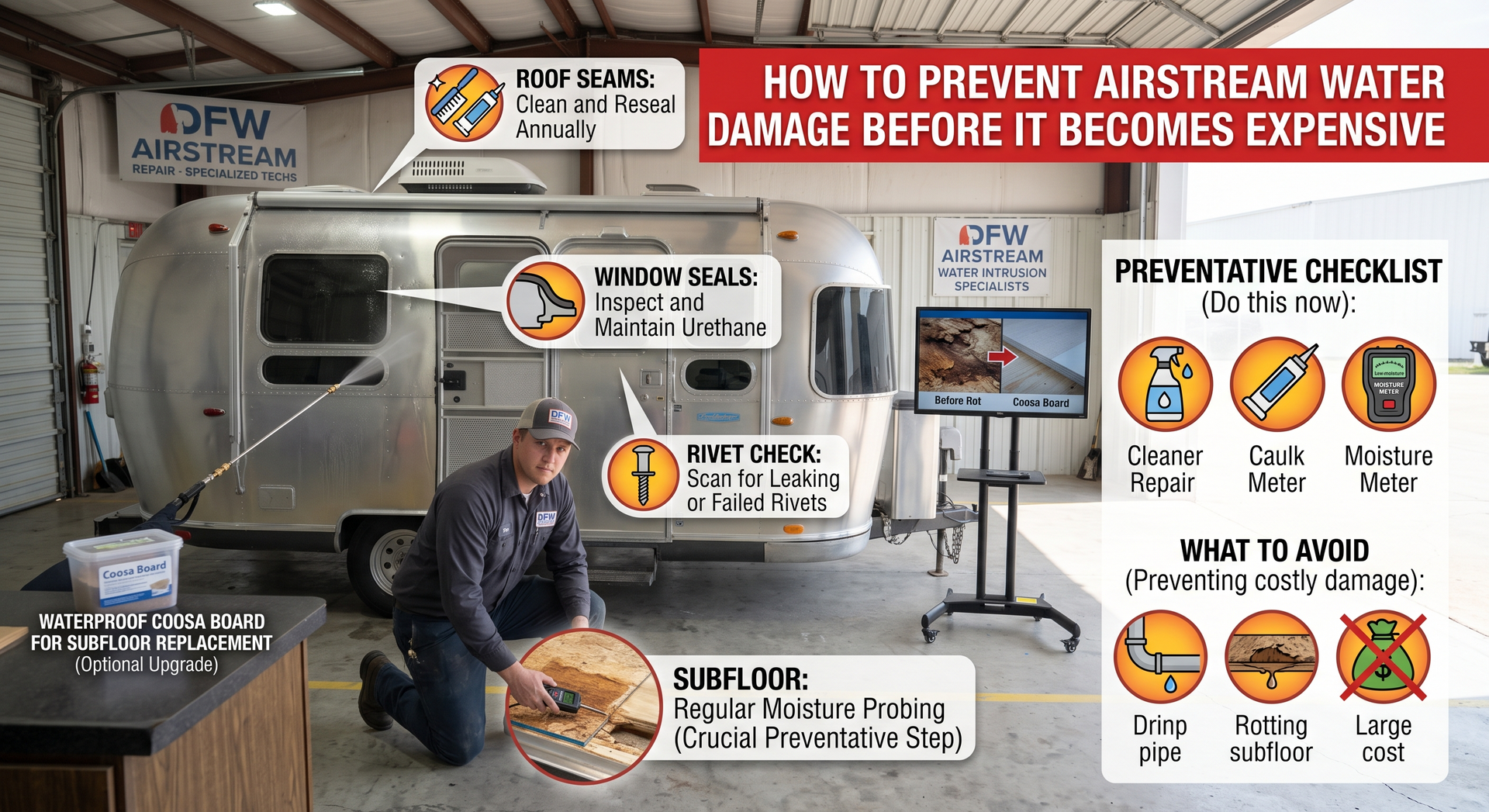
How to Prevent Airstream Water Damage
Preventive maintenance is usually far less expensive than repairing extensive water damage.
Inspect Seals and Sealants Regularly
Exterior sealants can deteriorate due to age, UV exposure, temperature changes, and road vibration. Inspect them regularly and address damaged areas before water gets inside.
Check the Roof After Severe Weather
After heavy rain, storms, or hail, inspect the roof and exterior components for damage.
Keep Gutters and Drainage Paths Clear
Water should be able to drain away from the Airstream rather than collecting around vulnerable areas.
Inspect Before and After Storage
Before storing your Airstream and again before taking it on a long trip, check for signs of moisture, stains, odors, or damaged seals.
Schedule Professional Inspections
A professional RV technician can identify potential problems that may not be obvious during a basic visual inspection.
When Should You Call an Airstream Repair Professional?
You should consider professional Airstream repair when you notice:
- Soft or damaged flooring
- Persistent water stains
- Repeated leaks
- Mold or mildew
- Extensive corrosion
- Damaged walls or ceiling materials
- Wet insulation
- Structural concerns
- Leaks that return after DIY sealing
The earlier water damage is addressed, the better the chance of preventing a small problem from becoming a major repair.
Final Thoughts
Airstream water damage can start with something as small as a deteriorating seal or minor plumbing leak, but the consequences can become significant if moisture remains undetected.
Watch for soft flooring, musty odors, stains, bubbling materials, mold, swollen cabinets, corrosion, damaged walls, and recurring leaks. These warning signs should never be ignored.
If you suspect your Airstream has water intrusion, a professional inspection can help identify the source, determine the extent of the damage, and recommend the right
Airstream repair solution before the problem gets worse.