
DFW Winter RV Prep: How to Prevent Frozen Plumbing and Tank Cracks in North Texas
DFW Winter RV Prep: How to Prevent Frozen Plumbing and Tank Cracks in North Texas
Winter weather across the Dallas-Fort Worth Metroplex is notoriously unpredictable. One afternoon might bring mild 65-degree sunshine, followed hours later by an Arctic cold front that plunges temperatures well below freezing.
Because Texas winters are typically short, many owners assume a deep winterization isn't necessary. However, water expands by approximately 9% when it freezes, exerting immense pressure on rigid plumbing lines. In just a few sub-freezing hours, trapped water can split PEX elbows, crack plastic water pump housings, and rupture expensive holding tank dump valves.
Whether you store your camper in Alvarado, park it at a resort near Fort Worth, or live in your rig full-time, follow this essential DFW winter prep checklist to keep your plumbing system crack-free.
1. Drain the Freshwater System and Low-Point Drains
The first line of defense against freeze damage is removing standing water from your plumbing network:
- Open Low-Point Drains: Locate the low-point drain valves (typically labeled underneath the chassis or inside a utility compartment) and open them alongside all interior hot and cold faucets to create a siphon effect.
- Empty the Freshwater Holding Tank: Open the fresh tank dump valve and let it drain completely.
- Bypass and Drain the Water Heater: Never drain your water heater while it is hot or under pressure. Turn off the heating element/gas burner, pull the pressure relief valve lever to release pressure, and remove the plastic drain plug or sacrificial anode rod. Ensure the bypass valves are turned so you do not accidentally fill the tank with antifreeze later.
2. Compressed Air Blowout vs. Antifreeze
For North Texas winters, owners usually choose between two primary winterizing methods depending on how frequently they use the rig during cooler months:
The Blowout Method (Ideal for Active Campers)
If you camp year-round across Texas state parks, blowing out your lines with an oil-free air compressor is quick and chemical-free:
- Attach a brass blowout plug to your city water inlet.
- Set your air compressor regulator strictly between 30 and 40 PSI to prevent blowing out PEX push-fittings or plastic fixture joints.
- Open one faucet at a time (kitchen, bathroom sink, shower, exterior spray port, and toilet flush valve) until only air mist emerges.
The Antifreeze Method (Ideal for Storage)
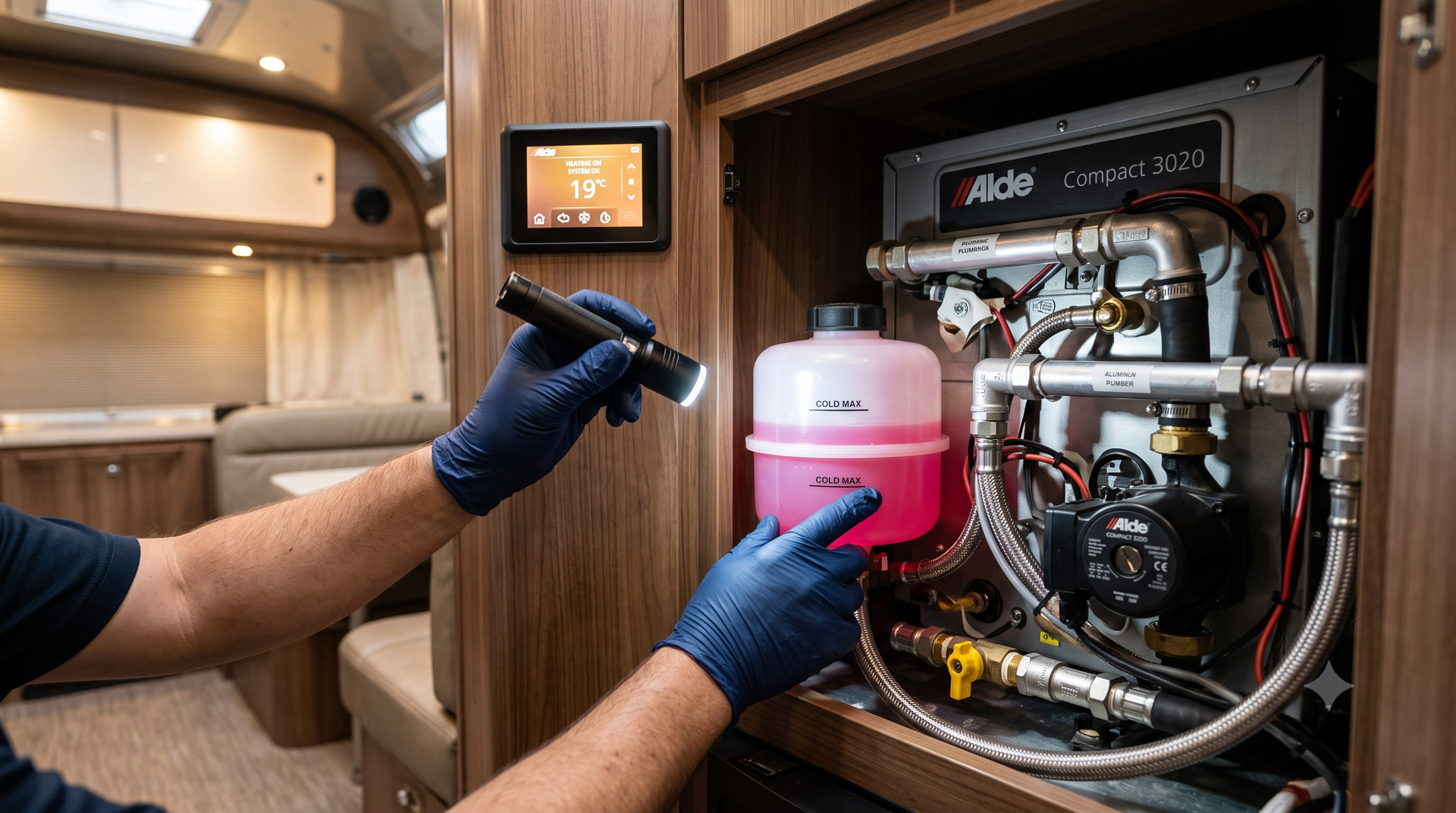
If your rig sits in an outdoor storage facility between November and March, pumping non-toxic propylene glycol antifreeze directly into your lines delivers guaranteed freeze protection:
- Connect a winterizing kit bypass hose to your 12V water pump inlet.
- Run the pump while opening each fixture until bright pink fluid runs steadily from every tap.
- Important: Never use automotive engine antifreeze; use only non-toxic, marine/camper-rated propylene glycol.
3. Don't Forget the Traps, Waste Tanks, and Dump Valves
Holding tanks and P-traps are particularly vulnerable to sudden cold snaps because they collect residual water:
- Dump & Flush Holding Tanks: Drain both black and grey holding tanks completely before cold weather hits.
- Protect the Gate Valves: Water caught behind standard plastic blade dump valves will freeze and crack the valve housing. Lubricate valve seals and keep the tanks empty.
- Pour Antifreeze Down All Drains: Pour at least 2 cups of antifreeze directly down the kitchen sink, shower drain, and bathroom sink to fill the P-traps and displace standing water. Add a cup into the toilet bowl to keep the rubber flush seal moist and insulated.
4. Prep for Full-Time Winter Living in DFW
If you reside in your rig during cold weather, you cannot simply drain your lines. Implement these freeze-prevention tactics instead:
- Heated Freshwater Hoses: Standard vinyl water hoses freeze and burst quickly. Upgrade to an electrically heated drinking hose or disconnect and stow your hose each evening, relying on your onboard fresh tank and internal water pump overnight.
- Tank Heating Pads & Underbelly Heat: Utilize built-in 12V tank heating pads when outdoor temperatures dip below 32°F. If your coach features an enclosed, heated underbelly, keep your furnace running—space heaters alone do not circulate warmth into the hidden subfloor plumbing cavities.
- Insulated Skirting: If you are staying put for several winter weeks, installing insulated vinyl skirting around the base of your rig drastically reduces wind chill underneath the subfloor, protecting floor-level plumbing and tanks.
Protect Your Investment Before the First Hard Freeze
Repairing cracked water manifolds, burst holding tanks, and water-damaged flooring after a hard freeze can run thousands of dollars. Taking a couple of hours to properly flush your system, insulate valves, and clear water lines ensures your rig remains road-ready whenever warmer weather calls.
Need professional winterization or fast freeze-damage repairs in Dallas-Fort Worth?
Contact the certified technicians at Cross Country RV Solutions at (817) 917-0092. We bring certified diagnostic and plumbing service directly to you across DFW.
Frequently Asked Questions
At what temperature will plumbing pipes freeze in Texas?
Unprotected plumbing lines can freeze when ambient temperatures remain at or below 32°F (0°C) for more than 4 to 6 consecutive hours. Wind chill can accelerate freeze times on exposed components like city water inlets and external dump valves.
Can I run space heaters instead of the furnace during a freeze?
While electric ceramic space heaters save propane inside the living quarters, they do not push heated air into the enclosed underbelly. In sub-freezing conditions, running the primary furnace is essential to keep hidden plumbing pipes and holding tanks from freezing.
Do I need to winterize if my rig has an "All-Weather" or "Four-Season" package?
Yes. "Four-season" packages typically feature thermal-pane windows, heated tank pads, and insulated underbellies, which help during active living in cold conditions. However, if the coach is unoccupied or left in storage without heating systems running, static water inside the lines will still freeze and cause damage.