
Airstream Front-End Separation: Warning Signs, Causes & Repair Options
Airstream Front-End Separation: Warning Signs, Causes & Repair Options
Airstream trailers are known for their iconic aluminum construction, durability, and long-lasting design. However, like any travel trailer, an Airstream can develop structural problems over time. One issue owners should take seriously is front-end separation.
If you own an Airstream and notice unusual movement, gaps, water intrusion, or changes around the front shell, early inspection can help prevent more extensive and expensive damage.
In this guide, we'll explain the warning signs of Airstream front-end separation, common causes, repair options, and when you should contact a professional technician.
What Is Airstream Front-End Separation?
Airstream front-end separation occurs when the front portion of the trailer's body begins to separate from the underlying frame or floor structure.
The aluminum shell and interior components depend on the trailer's frame and attachment points for structural support. When these connections weaken, the front section may move independently from the frame.
The problem can develop gradually, making early warning signs easy to overlook.
Warning Signs of Airstream Front-End Separation
Knowing what to look for can help you identify the problem before it becomes severe.
1. Visible Gaps or Movement
One of the most noticeable signs is a gap developing between the exterior shell and the frame or floor area.
You may also notice movement when:
- Walking inside the front of the trailer
- Hitching or unhitching
- Driving over uneven roads
- Applying the brakes
- Changing the trailer's level
Unusual movement around the front end should be inspected rather than ignored.
2. Cracks or Separation Around Interior Panels
Check the interior walls, cabinets, and trim near the front of the Airstream.
Signs such as cracked seams, separating panels, unusual gaps, or movement in cabinetry may indicate that the structure is shifting.
These symptoms do not automatically mean front-end separation, but they warrant further inspection.
3. Water Leaks Near the Front
Water intrusion can be both a symptom and a contributing factor.
Inspect areas around:
- Front windows
- Exterior seams
- Rivets
- Trim
- Storage compartments
- Floor and wall junctions
Persistent moisture can contribute to wood-floor deterioration and corrosion, potentially weakening structural connections.
4. Soft or Damaged Flooring
A soft floor near the front of an Airstream can indicate water damage or deterioration underneath the visible surface.
If the floor feels spongy, flexes unusually, or shows signs of rot, don't simply replace the flooring without investigating the underlying cause.
5. Unusual Noises While Towing
Pay attention to new creaking, popping, squeaking, or other structural noises while towing.
Airstreams naturally experience movement on the road, but a new or increasingly noticeable noise can be a reason to schedule a professional inspection.
6. Changes Around the Hitch or Frame
Because the front end is closely connected to the frame and hitch structure, visible corrosion, cracks, damaged attachment points, or unusual movement in this area should be evaluated by an experienced RV technician.
What Causes Airstream Front-End Separation?
Several factors can contribute to front-end separation.
Water Damage and Floor Deterioration
Water intrusion is one of the most important issues to investigate. Prolonged moisture exposure can damage structural flooring and attachment areas.
Frame Stress
The trailer frame experiences significant loads during towing. Repeated stress from road conditions, heavy loads, or long-term use can contribute to structural problems.
Corrosion
Metal components can deteriorate when exposed to moisture and road conditions over an extended period. Corrosion can weaken structural connections and attachment points.
Age and Wear
Older Airstreams may be more susceptible to structural issues simply because components have experienced years of vibration, weather exposure, and towing.
Previous Repairs
Improperly performed repairs or modifications can sometimes contribute to future structural problems. This is why it is important to understand an Airstream's repair history when diagnosing front-end issues.
How Is Airstream Front-End Separation Diagnosed?
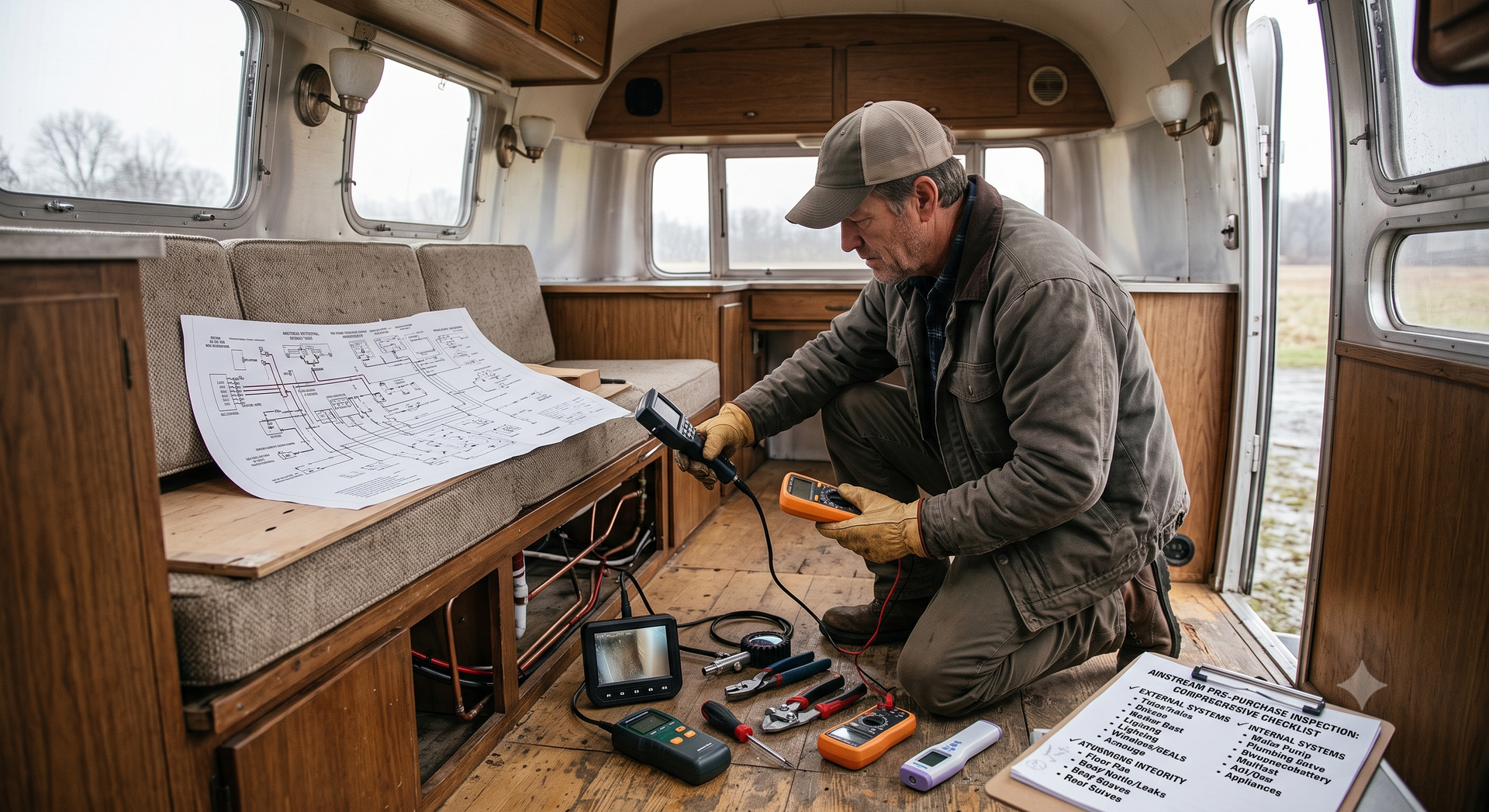
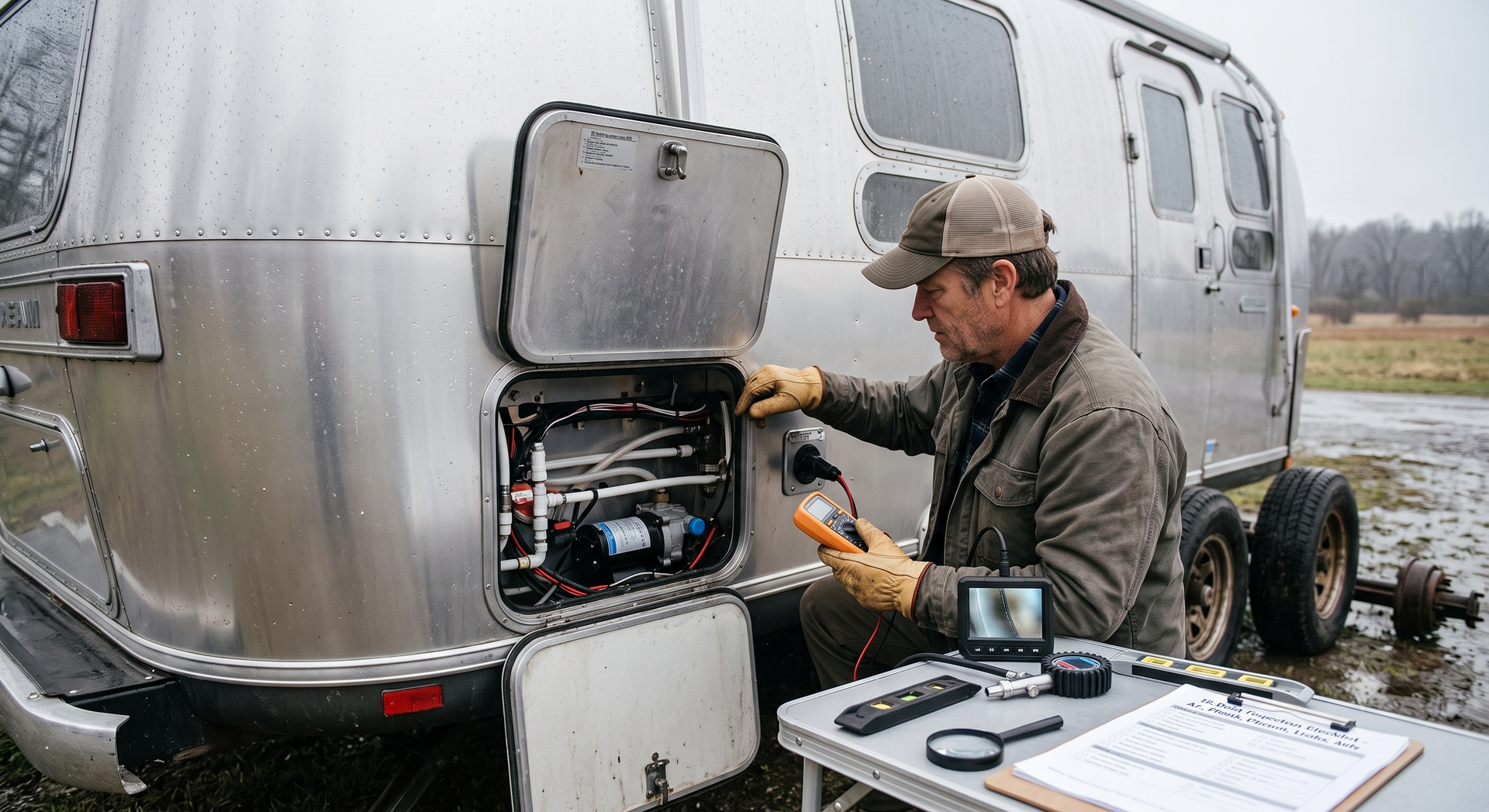
A professional technician should inspect the Airstream rather than relying on a single visible symptom.
A typical inspection may include:
- Examining the exterior shell and front end.
- Checking the floor for softness or deterioration.
- Inspecting frame and attachment points.
- Looking for corrosion or structural damage.
- Checking for evidence of water intrusion.
- Evaluating movement between the shell, floor, and frame.
- Determining whether previous repairs have affected the structure.
The goal is to identify the underlying cause, not simply repair the most visible symptom.
Airstream Front-End Separation Repair Options
The appropriate repair depends on the severity and cause of the problem.
Minor Repairs
If the issue is identified early, repairs may involve addressing water intrusion, replacing damaged fasteners or seals, repairing localized floor damage, or correcting smaller attachment issues.
Floor Repair or Replacement
If moisture has caused significant floor deterioration, damaged sections may need to be removed and replaced before the structural connections can be properly restored.
Structural Repair
More serious separation may require repairs to the frame, attachment points, fasteners, or related structural components.
These repairs should be performed by technicians with appropriate Airstream and RV structural repair experience.
Exterior Sealing
Once the structural issue has been addressed, damaged seals and exterior entry points should be repaired to reduce the risk of future water intrusion.
Can You Drive an Airstream With Front-End Separation?
It depends on the severity of the problem.
A minor cosmetic issue may not immediately affect towing, but suspected structural separation should not be dismissed. Continuing to tow a trailer with an unresolved structural problem can potentially make the damage worse.
If you notice significant movement, frame damage, major floor deterioration, or serious separation, have the Airstream inspected before taking it on another long trip.
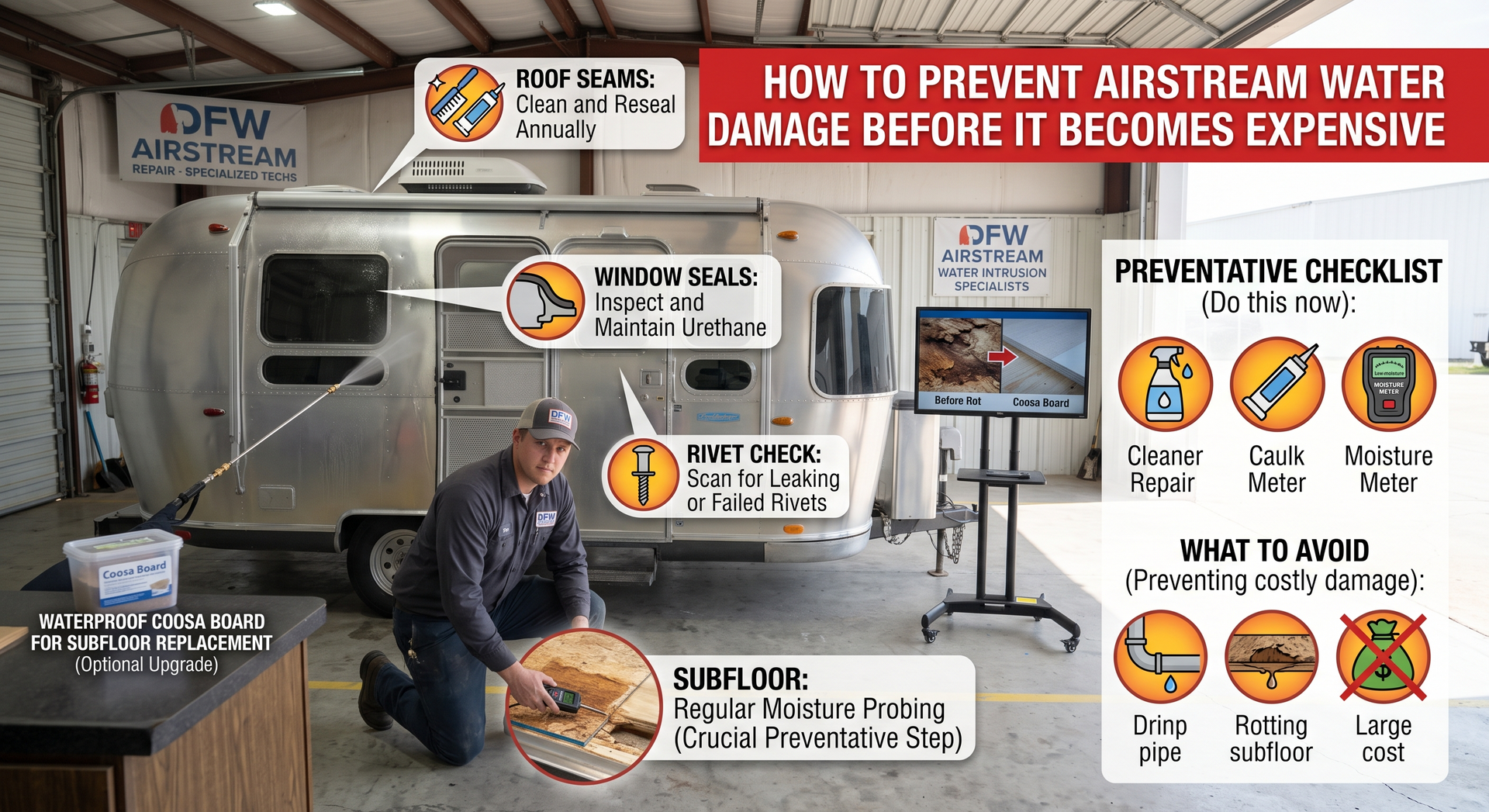
How to Prevent Airstream Front-End Problems
Regular inspections can help catch problems early.
Consider checking your Airstream:
- Before and after long trips
- After severe weather
- Around exterior seams and windows
- Underneath the trailer for corrosion
- Around the front floor
- Near frame and attachment points
- For signs of moisture or water intrusion
Addressing small leaks and structural concerns early can reduce the likelihood of more extensive repairs.
When Should You Call an Airstream Technician?
Contact a qualified technician if you notice:
- Front-end movement
- Soft flooring
- Persistent water leaks
- Structural gaps
- Significant corrosion
- Cracks or separation around the front
- Unusual towing noises
- Damage around the frame or hitch
A professional inspection can help determine whether you're dealing with normal wear, water damage, or a more serious structural problem.
Final Thoughts
Airstream front-end separation should never be ignored. What starts as a small leak, soft floor, or visible gap can potentially develop into a much larger structural repair.
Early diagnosis is the key. If you notice warning signs, have your Airstream inspected by an experienced technician who can identify the cause and recommend the appropriate repair.
Keeping up with inspections, sealing, structural maintenance, and water-damage prevention can help protect your Airstream and keep it ready for the road.